Module 15: Security Incident Reporting
This was a short module, but it connected the rest of the CDSA journey. An investigation is not finished when I find the malicious process, recover the payload, or reconstruct the timeline. I still need to explain what happened, prove each important claim, show what the organization did about it, and make the result useful to people who were not sitting beside me during the analysis.
My biggest takeaway was simple: an incident report is not a data dump. The technical detail matters, but it needs structure, evidence references, clear confidence, and enough business context for someone to make a decision.
Back to Module 14: Module 14: Introduction to Digital Forensics
Module 15 Navigation
On this page
Why Incident Reporting Matters
Security incidents are treated as an expected operational risk. Preparation therefore needs both a technical response process and a reporting process that connects detection to remediation.
A Security Operations Center (SOC) depends on that record to route work, preserve shared context, brief stakeholders, and improve future detections.
A useful report serves several audiences:
- Analysts and responders need technical facts, evidence locations, pivots, scope, and unresolved questions.
- Management needs impact, current risk, response status, decisions, and resource needs.
- Legal, privacy, and compliance teams need notification facts, affected data, jurisdiction, preservation details, and a defensible activity record.
- Finance and insurance teams may need downtime, recovery cost, financial exposure, and control-failure information.
- Future investigators need an archive that explains what worked, what failed, and what should change.
The difficult part is balancing accessibility with technical depth. I do not want to hide the evidence from technical readers, but I also do not want an executive summary that requires Volatility or Windows Registry knowledge to understand.
Incident Identification and Categorization
Initial identification often begins with an anomaly or a deviation from the expected baseline.
Identification Sources
- Security tooling: IDS or IPS alerts, EDR or XDR detections, SIEM correlation, antivirus alerts, NetFlow, authentication logs, and cloud telemetry
- Human observations: suspicious emails, unexpected prompts, unusual system behavior, missing data, or a user reporting something that feels wrong
- Third-party notifications: reports from vendors, partners, customers, researchers, law enforcement, or service providers
- Threat-actor notification: ransom notes, extortion messages, or public claims that require independent validation
No source is automatically correct. An alert starts the investigation, while evidence establishes what actually happened.
Common Incident Categories
- Malware or ransomware
- Phishing and social engineering
- Distributed denial-of-service (DDoS) activity
- Unauthorized access
- Data exposure or exfiltration
- Insider activity
- Web or application compromise
- Physical-security breach
Categories help route ownership and brief stakeholders, but one incident can span several categories. A phishing email can lead to credential theft, unauthorized access, malware execution, lateral movement, and data exfiltration.
Incident Severity
Many organizations use a four-level model:
| Priority | General meaning | Typical response expectation |
|---|---|---|
| Critical, P1 | Core services, safety, highly sensitive data, or major business operations face immediate harm | Immediate coordinated response and executive awareness |
| High, P2 | Serious impact or a credible path to major impact exists | Rapid response with close tracking |
| Medium, P3 | The incident requires timely investigation but is not creating immediate major harm | Prioritized handling within the normal response process |
| Low, P4 | Limited impact, routine anomaly, or low-risk policy issue | Standard queue and documented follow-up |
These labels are not universal. The organization should define severity using its own business impact, asset criticality, data sensitivity, affected population, threat activity, and recovery requirements.
Severity also changes. An event that begins as a low-confidence alert may become critical after the analyst confirms privileged access or active exfiltration. The report should preserve that evolution instead of silently replacing the original assessment.
The Reporting Process
The Academy material presented reporting as a seven-stage process. I read it as a continuous record rather than a document written only after everything is over.
- Initial detection and acknowledgement: Record how the incident was detected, when it was acknowledged, who accepted ownership, and what was known.
- Preliminary analysis: Establish suspected scope, affected assets, initial category, working severity, business risk, and immediate questions.
- Incident logging: Record actions and observations as they occur in a durable, time-stamped case record. Platforms such as TheHive or Jira make ownership and chronology easier to manage. If no case platform is available, a controlled spreadsheet or written log is better than losing the record.
- Stakeholder notification: Notify the appropriate internal groups and any required external parties.
- Detailed investigation: Build the technical account from evidence and distinguish current facts from work still in progress. Depending on scope, litigation, and long-term recovery, the investigation and reporting record may remain active for days, months, or even years.
- Final report: Consolidate the executive view, technical findings, impact, response, recovery, evidence references, open risks, and recommendations.
- Feedback loop: Convert lessons into owned actions. A lesson without an owner, priority, and due date is only an observation.
Structure of an Incident Report
Executive Summary
The executive summary is the gateway for readers who need the outcome without every forensic detail. It should include:
- Incident ID, title, category, severity, status, and owner
- Detection time, confirmed start time if known, containment time, recovery time, and reporting period
- A concise description of what happened
- Affected services, systems, users, and data
- Confirmed business impact
- Root cause or initial-access method, if proven
- Major containment and recovery actions
- Current residual risk and decisions still required
If the root cause is unknown, I should say that directly. Naming a CVE or threat actor without evidence makes the summary sound confident but weakens the entire report.
Scope and Impact
Scope defines the investigation boundary:
- Known and potentially affected assets
- Accounts, identities, and trust relationships
- Data types and approximate record counts
- Business processes and third parties
- Time range examined
- Evidence or visibility gaps
Impact should separate confirmed effects from plausible exposure. Downtime, financial loss, data access, data exfiltration, safety risk, regulatory impact, and reputational harm should not be blended into one vague statement.
Evidence and Integrity
The report should identify each evidence source and preserve enough detail for another analyst to locate and verify it.
| Evidence field | What to record |
|---|---|
| Evidence ID | A unique reference used throughout the report |
| Source | Host, account, device, service, application, or third party |
| Artifact | Disk image, memory image, log, packet capture, email, Registry hive, or exported record |
| Collection details | Collector, date and time, tool, method, and relevant command or query |
| Integrity | Hash algorithm and digest where hashing is appropriate |
| Storage | Controlled evidence location and access restrictions |
| Relevance | What claim or timeline event the evidence supports |
Hashing can demonstrate that a collected file has not changed since acquisition. It does not prove that the original source was trustworthy, so provenance and collection context still matter.
Indicators and Findings
Indicators of Compromise can include hashes, domains, IP addresses, URLs, filenames, Registry paths, scheduled tasks, process chains, and account activity. Each indicator should say where and when it was observed, which asset was involved, what evidence supports it, and whether it is malicious, suspicious, or merely relevant.
Attribution requires more than shared infrastructure or a familiar tool. If the evidence only supports a technique or malware family, the report should stop there.
Technical Timeline
A timeline connects attacker activity with defender activity. I would normalize timestamps to UTC and preserve the original timezone when it matters.
| Time | Actor or source | Event | Evidence | Confidence |
|---|---|---|---|---|
| Timestamp | User, process, host, security control, or responder | What happened | Evidence ID or source reference | Confirmed, high, medium, or low |
The attacker timeline may include reconnaissance, initial access, execution, persistence, privilege escalation, defense evasion, credential access, discovery, lateral movement, command and control (C2), collection, exfiltration, and impact.
The response timeline should include detection, acknowledgement, triage, containment, eradication, recovery, stakeholder notifications, and major decisions.
Response, Recovery, and Improvement
Access Revocation and Containment
The report should explain how the team stopped further harm:
- Disabled or restricted compromised accounts
- Revoked tokens, sessions, keys, and credentials
- Isolated hosts or network segments
- Changed firewall, proxy, DNS, or identity policies
- Blocked malicious indicators
- Preserved volatile evidence before disruptive action when feasible
Short-term containment limits immediate damage. Long-term containment may involve segmentation, stronger identity controls, or architectural changes such as zero-trust design.
Eradication
Eradication removes the attacker’s foothold and closes the path used to enter:
- Remove malware and persistence
- Patch exploited vulnerabilities
- Correct unsafe configurations
- Rebuild systems when trust cannot be restored
- Rotate credentials and secrets
- Verify affected identities, endpoints, and infrastructure, including checks for persistence and process injection
EDR detections, checksum comparison, heuristic analysis, forensic review, configuration validation, and targeted hunting can support verification. No single clean scan proves that the entire environment is safe.
Recovery
Recovery returns services to production in a controlled way:
- Validate backups before restoration
- Confirm data and configuration integrity
- Test patches and fallback procedures
- Restore systems in a defined order
- Update relevant IDS or other monitoring logic
- Increase monitoring during the observation period
- Confirm business-owner acceptance
- Document residual risks
Post-Incident Improvement
The final report should convert gaps into prioritized work with a corrective action, risk, owner, priority, due date, and validation method.
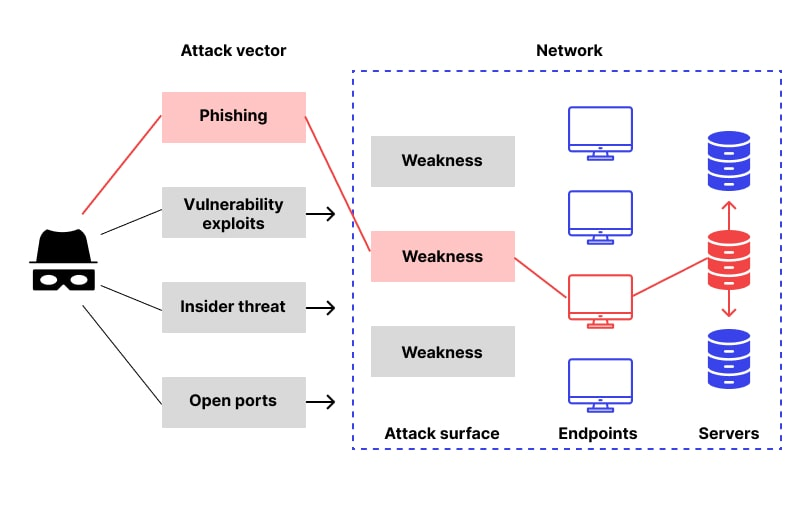
Visuals can make a long investigation easier to understand. Useful options include an incident flowchart, affected-systems map, trust-path diagram, and attack-vector diagram.
Appendices can hold the evidence register, detailed timelines, IoC tables, queries, commands, log extracts, communication records, and disk or memory image references. Large or sensitive evidence should be referenced from controlled storage instead of embedded directly into a broadly distributed report.
Incident Communications
Communication is part of incident response, not an activity that happens after the technical work.
Internal Communication
Internal updates should use a known incident owner and approved channel. They should separate facts, assessments, and decisions, state what changed since the previous update, identify blockers, and preserve a record of material decisions.
Security, IT, legal, privacy, communications, management, and business owners may all need the same underlying truth presented at different levels of depth.
External Communication
Customers, partners, regulators, insurers, law enforcement, and the public need different levels of detail. External statements should be accurate, understandable, approved through the correct process, and limited to information that can be supported.
Securing the Channel
Sensitive incident information can reveal exploitable weaknesses, credentials, personal data, or investigative strategy. Depending on the risk, controls may include:
- End-to-end encryption
- Multi-factor authentication (MFA)
- Restricted membership and role-based access
- Separate out-of-band communication if the normal environment may be compromised
- An isolated or air-gapped system for exceptional cases
Authenticated encryption protects confidentiality and integrity in transit. Digital signatures or message-authentication controls can provide stronger origin and integrity assurance than a standalone cryptographic hash, which does not prove who sent a message.
Ephemeral messaging may reduce residual exposure, but it can conflict with legal hold, audit, regulatory, and decision-record requirements. The incident team should follow approved retention rules and obtain legal guidance rather than choosing an auto-delete setting informally.
Regulatory and Legal Considerations
Notification requirements depend on the jurisdiction, sector, contract, affected data, and assessed risk. The report should record:
- Which legal or contractual duties were evaluated
- Who made the notification decision
- When the organization became aware of the relevant facts
- Which regulator, customer, partner, insurer, or individual was notified
- What information was provided
- Why notification was not required, if that was the decision
For example, current UK ICO guidance says a notifiable personal data breach must be reported without undue delay and no later than 72 hours after awareness. A breach that is unlikely to create a risk to people’s rights and freedoms may not require notification, but the decision still needs documentation. High-risk breaches may also require notification to affected individuals without undue delay.
That is one jurisdiction-specific example, not a universal deadline. Cross-border incidents may involve the EU GDPR, UK GDPR, other privacy laws, cybersecurity requirements, sector rules, contracts, and data-sovereignty restrictions.
Chain of Custody
If evidence may support disciplinary, insurance, regulatory, civil, or criminal proceedings, maintain a clear chain of custody:
- Unique evidence identifier
- Collector and source
- Collection date and time
- Collection method
- Integrity hash where appropriate
- Every transfer or access
- Storage location
- Purpose of examination
The report should not claim that evidence is legally admissible by default. It should document handling in a way that supports later legal review.
Reusable Incident Report Template
This is the compact structure I would use as a starting point:
1. Incident Control
- Incident ID and title
- Category and current severity
- Status and incident owner
- Reporting period
- Distribution and classification
2. Executive Summary
- What happened
- When it happened
- What was affected
- Confirmed impact
- Current response status
- Decisions or support required
3. Scope and Impact
- Confirmed and potential scope
- Affected systems, identities, data, and business processes
- Financial, operational, privacy, safety, and contractual impact
- Known visibility gaps
4. Technical Findings
- Initial-access method and root cause
- Attacker actions and TTPs
- Persistence and command-and-control mechanisms
- Evidence-backed findings
- IoCs with context
- Confidence and alternative explanations
5. Timeline
- Attacker events
- Detection and investigation events
- Containment, eradication, and recovery events
- Notifications and decisions
6. Response and Recovery
- Actions taken
- Action owner and timestamp
- Validation performed
- Current recovery state
- Residual risk
7. Communications and Notifications
- Internal stakeholders
- External parties
- Legal and regulatory assessment
- Notification timestamps and content references
8. Lessons and Actions
- What worked
- What failed
- Detection and logging gaps
- Recommended action
- Owner, priority, and due date
- Validation plan
9. Appendices
- Evidence register
- Full IoC table
- Detailed technical timeline
- Commands, queries, and tool output
- Diagrams
- Referenced evidence locations
What I Learned from the Sample Report
The sample incident report in the Academy module made several points clearer for me:
- Technical depth should change with the audience, but the evidence should remain available.
- Every important claim needs clear, verifiable support.
- The nature-of-the-attack section should explain the attacker’s behavior and TTPs, not merely name the malware.
- Impact analysis needs to consider business operations, internal structure, affected people, partners, and regulatory obligations.
- Timeline analysis should show what happened, when it happened, how the attack progressed, and how the response changed the situation.
The part I want to carry into future modules is the separation between observation, interpretation, and conclusion. A log entry is an observation. My explanation of it is an interpretation. The final claim should state how strongly the available evidence supports that conclusion.
Module Takeaway
A strong report lets different readers reach the same defensible understanding of the incident. It preserves the technical trail, explains uncertainty honestly, records the response, and turns lessons into accountable improvements.
The investigation finds the evidence. The report makes that evidence usable.